The Second Module at UTwente #
The second module of Creative Technology (CreaTe) at UTwente is titled “Smart Environments”. Building upon the foundational skills from Module 1, this module shifts the focus toward ubiquitous computing, exploring how sensors and computers can be integrated with everyday objects and connected through networks. The module was packed with different subjects that all came together to teach us how to build distributed, context-aware, and intelligent systems. Here are the main subjects we tackled:
Programming & Physical Computing (P&PC) #
In this course, we learned how to design and realize interactive programs for both screen interfaces and embedded applications. This was crucial for bringing our physical prototypes to life and making sure our hardware could communicate with our software.
Sounds & Circuits (S&C) #
This subject was all about getting hands-on with electric hardware, circuitry, and electronics. We learned how to operationalize the math from our lectures into real physical systems, specifically concerning sound, music, and circuit design.
Additional Courses #
Professional Development (ProfDev) to hone our collaborative and professional skills. The project I did can be found be found in my projects.
The Main Project: Gr8 Food Systems #
For our main project, our group focused on a pressing societal issue: household food waste. Food waste in Europe represents a massive environmental burden and economic inefficiency.
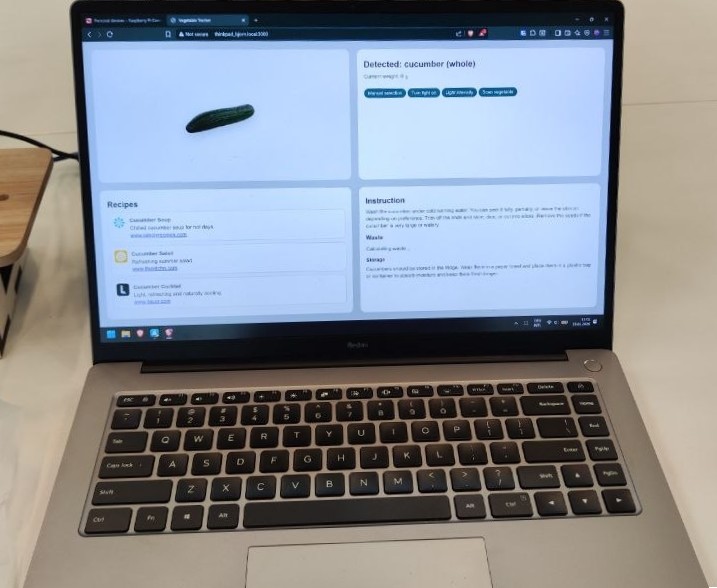
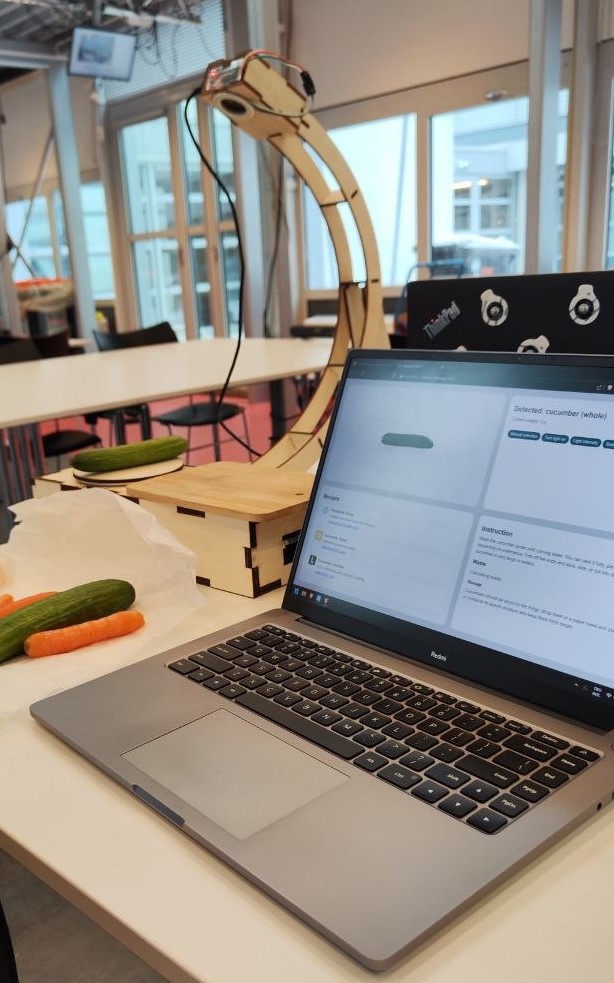
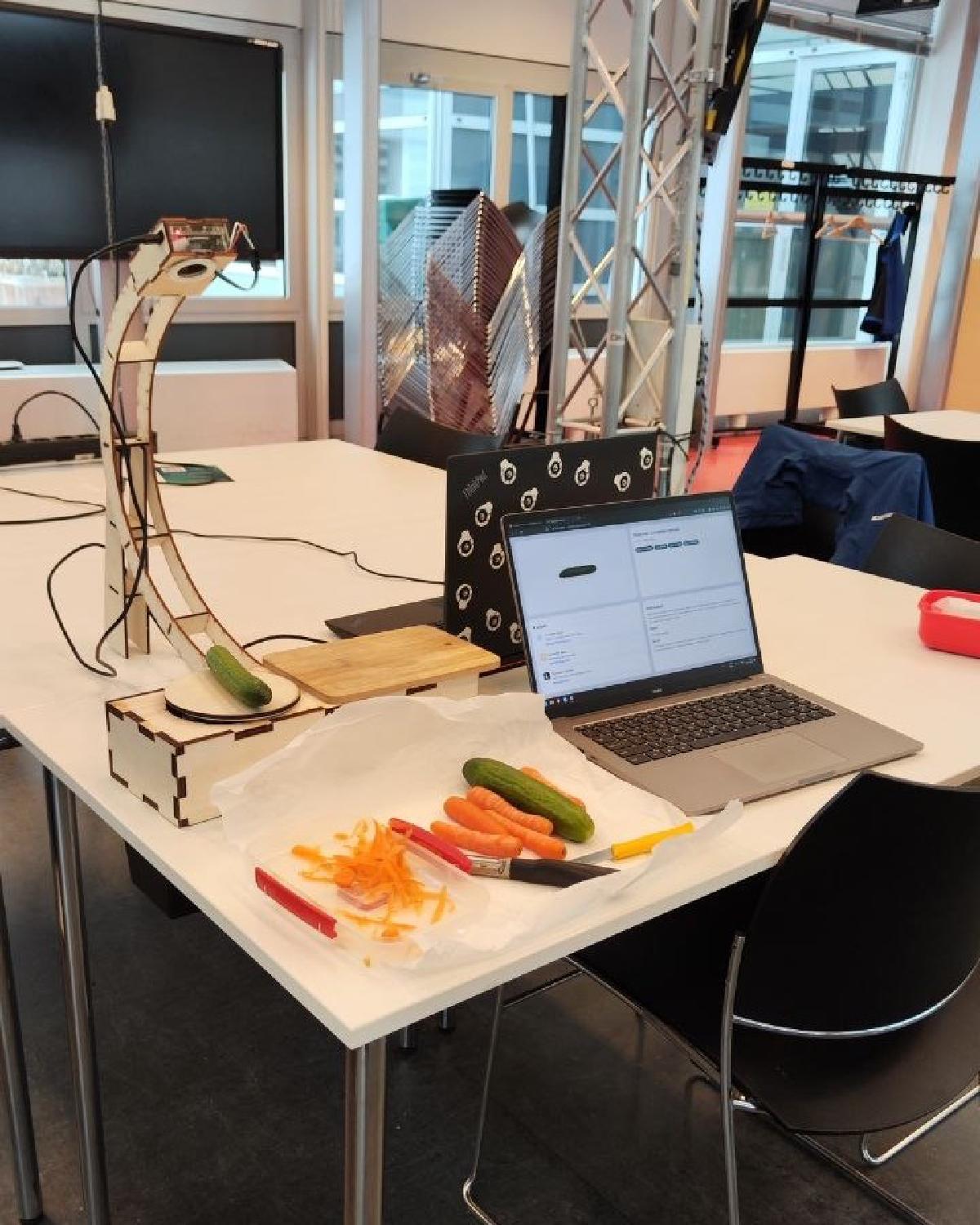
To tackle this, we designed and built a Smart Cutting Board. The goal of the board is to sense what type of food is being prepped, measure the amount of waste produced, and provide users with direct insights into their food usage patterns to hold them accountable. It also gives actionable tips and recipes based on the detected ingredients to encourage more efficient use of food.
I am incredibly proud to share that we won first place in the local competition for the best project among all CreaTe teams!
My Role & Contributions #
Our project had to be a modular system, as a true smart environment relies on multiple distributed components and nodes working together to become context-aware. This allowed us to divide and conquer the different components. I specifically focused on the “brains” of the system: the AI and Camera module.
-
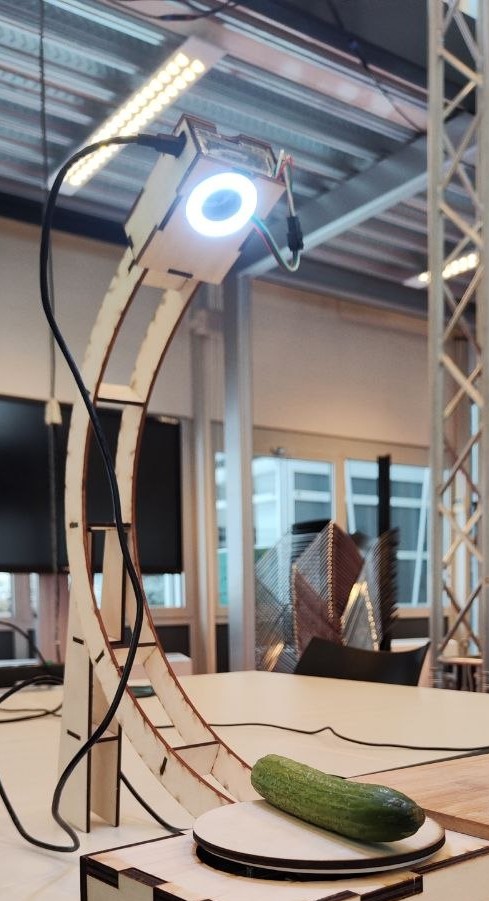
The AI Vision Module: I built the camera system using a Raspberry Pi 3B, a camera module, and an LED to create consistent lighting. I implemented a machine learning model capable of recognizing various vegetables (like tomatoes, carrots, broccoli, potatoes, and cucumbers). The model achieved a 94% accuracy rate during our testing.
-
Controller & Integration: Beyond the camera, I assisted with writing the code for the main controller node. This node had to communicate with our custom weight scale, which was built using an HX711 load cell amplifier and a 1kg load cell integrated directly into the cutting board. An Arduino was used for reading the load cell data. The Arduino then sent this data over a serial connection back to the laptop, which ran the main controller.
-
User Interface: I also helped develop the user interface and website. The UI was written using Node.js, plain HTML, CSS, and JS. The website acts as the dashboard, receiving data from the camera and scale nodes. It dynamically updates to show the user the recognized vegetable and the current weight of the food or waste, and it suggests relevant recipes or cutting advice to minimize waste.
By combining hardware sensors, machine learning, and an interactive web dashboard, we successfully created a ubiquitous solution that works in the background to help users build more sustainable cooking habits.