The Third Module at UTwente #
The third module of Creative Technology (CreaTe) at UTwente is titled “Living and Working Tomorrow.” Building upon the technical foundations from Module 2, this module pushes our skills straight into the real world. Instead of just connecting sensors in closed environments, Module 3 challenges us to think deeply about human-technology interaction within shifting societal, living, and working landscapes.
The curriculum focused heavily on understanding user needs, iterative prototyping, and designing technology that actively improves everyday human experiences. Here are the core pillars we explored:
User-Centered Design & Ideation #
We learned how to move from a broad societal challenge to a concrete, empathy-driven concept. This involved conducting user research, mapping out journeys, and understanding how people actually interact with physical objects in shared spaces.
Advanced Prototyping #
We focused on building systems that don’t just look good, but function autonomously. We leveled up our fabrication and assembly skills, moving beyond basic breadboards to create robust, self-contained interactive systems designed for public or semi-public deployment.
The Main Project: The Autonomous Neighborhood Penpal System #
For our main project, our group was presented with a beautiful yet complex challenge: how to increase social cohesion within a local neighborhood. In an increasingly digital world, people often live next door to individuals they’ve never actually met or spoken to.
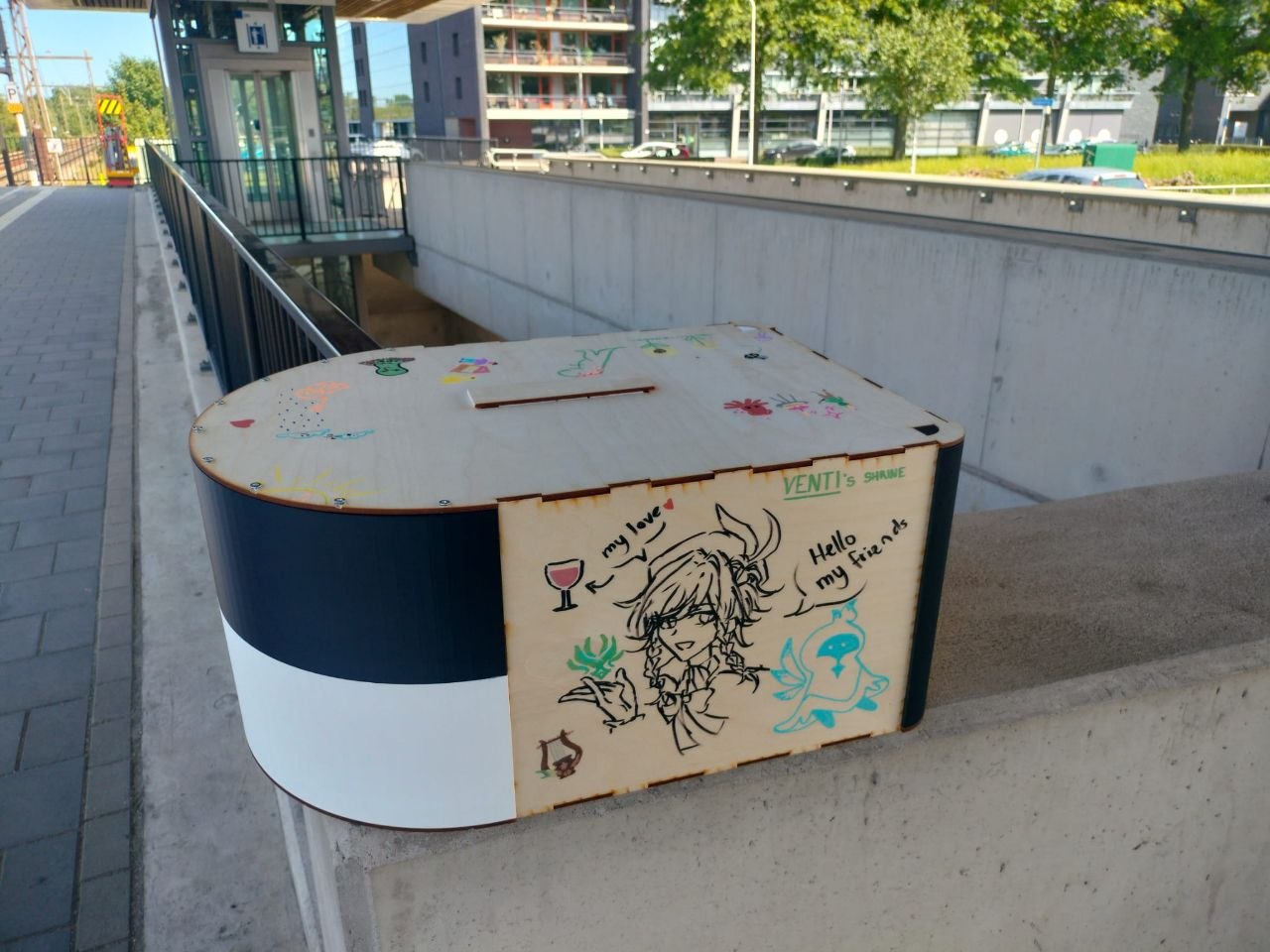
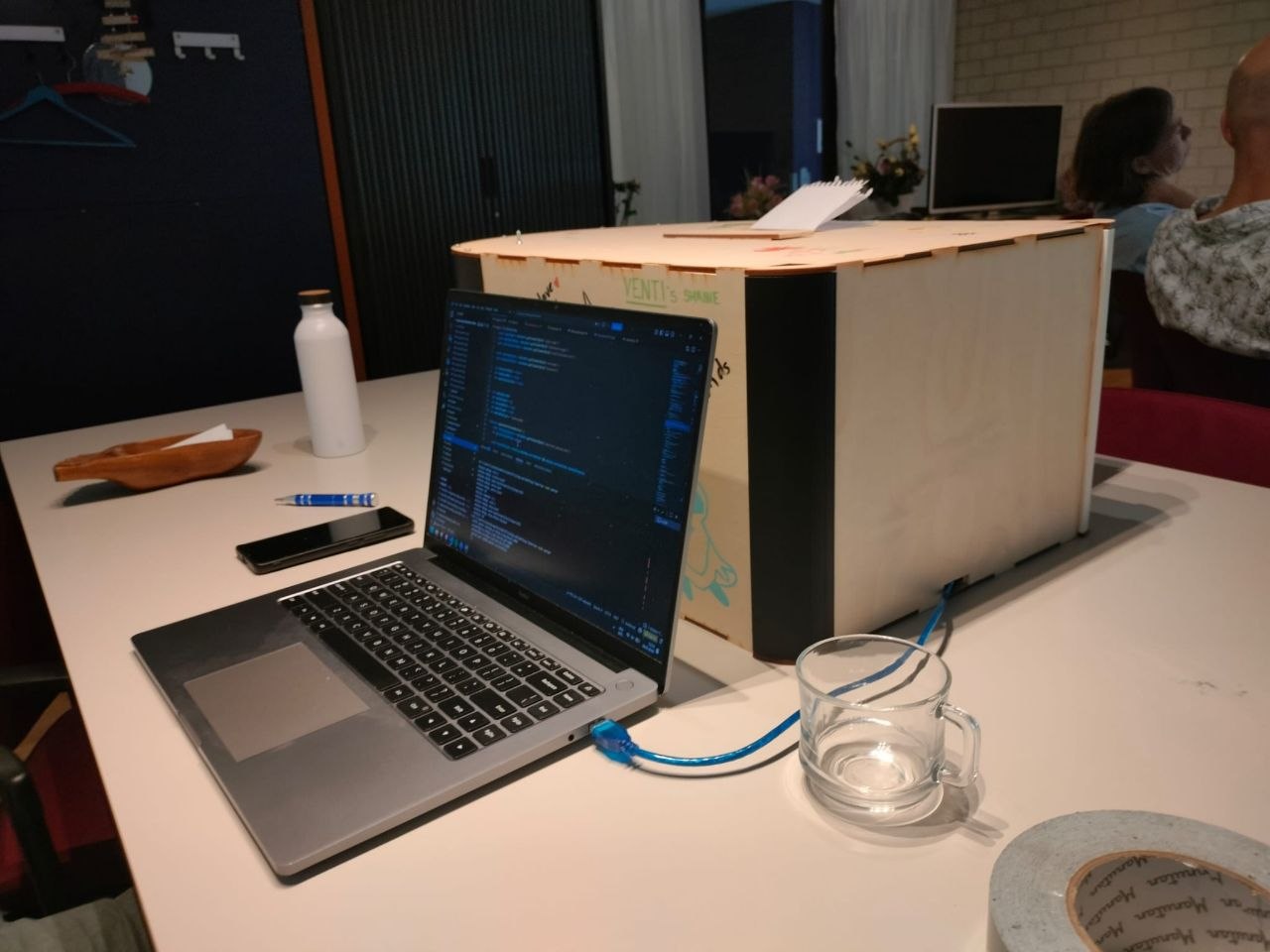
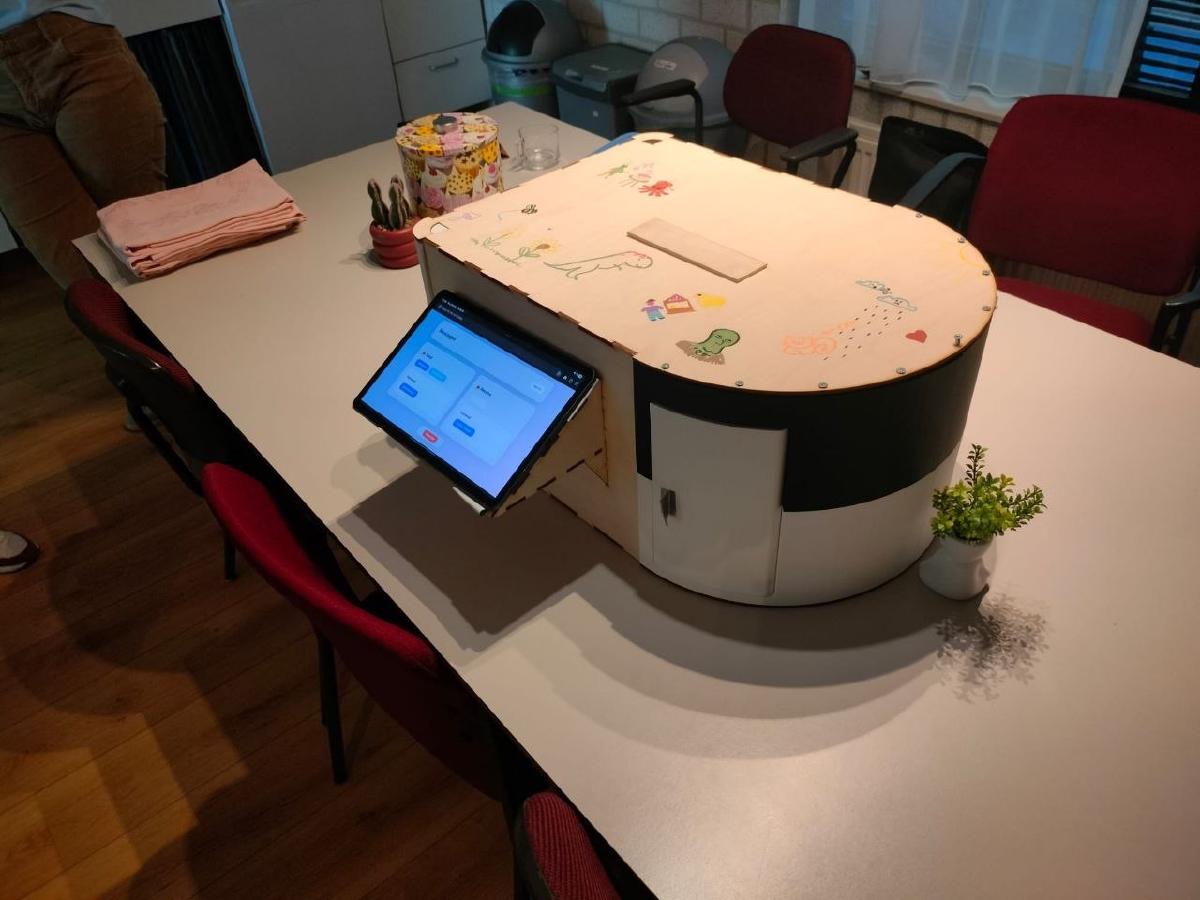
To bridge this gap, we designed and built an Autonomous Neighborhood Penpal System. It looks and feels like a classic community postbox, but underneath the hood, it is a fully autonomous, self-sorting communication hub. Neighbors simply walk up to the box to either drop off a letter or retrieve one waiting for them.
The Twist: Anonymous Interest Matching #
The magic of the system lies in how it connects people. The system is entirely anonymous and relies on a questionnaire that every neighbor answers when they sign up.
- Smart Matching: An internal algorithm processes these questionnaires and pairs penpals based on shared hobbies, backgrounds, or quirky mutual interests.
- Encouraging Movement: By placing the physical box in a central neighborhood location, it naturally encourages residents to step outside, take a walk through their neighborhood more often, and check for mail.
- Breaking the Bubble: It safely and excitingly gets people in contact with neighbors they might otherwise pass by without a second glance.
Community Customization & Gamification #
We didn’t want this to feel like a sterile piece of tech dropped into a neighborhood, so we added a few extra layers to drive engagement:
- Visual Customization: The physical exterior of the postbox is designed so that each unique neighborhood can customize and decorate it, allowing the community to literally leave their mark on the system.
- Planned Games: To keep the interaction fresh over time, we designed concepts for neighborhood-wide text-based games and icebreaker challenges facilitated directly through the letter exchanges.
My Role & Contributions #
Because this project required a seamless blend of mechanical engineering, internal electronic sorting, and database management, we split into distinct roles. I focused heavily on the core mechanics and user onboarding experience:
- The Internal Sorting & Mechanical Drive: I worked on designing and programming the internal autonomous sorting mechanism. When a letter is dropped in, the system needs to recognize who it’s from and physically route or clear it into the correct internal compartment so the right neighbor can retrieve it later.
- The Questionnaire & Database Backend: I helped build the digital sign-up flow and the matching database. I wrote the logic that takes the questionnaire data, evaluates the interest overlaps, and creates the anonymous penpal pairings behind the scenes.
- User Experience & Feedback: I assisted in integrating the physical interface on the box (buttons and status LEDs) that guides users through the process of sending or receiving, ensuring the technology feels welcoming and accessible to neighbors of all ages.
By transforming a routine walk into an opportunity for authentic, old-school connection, our autonomous penpal box successfully leverages technology to bring physical neighborhoods closer together.